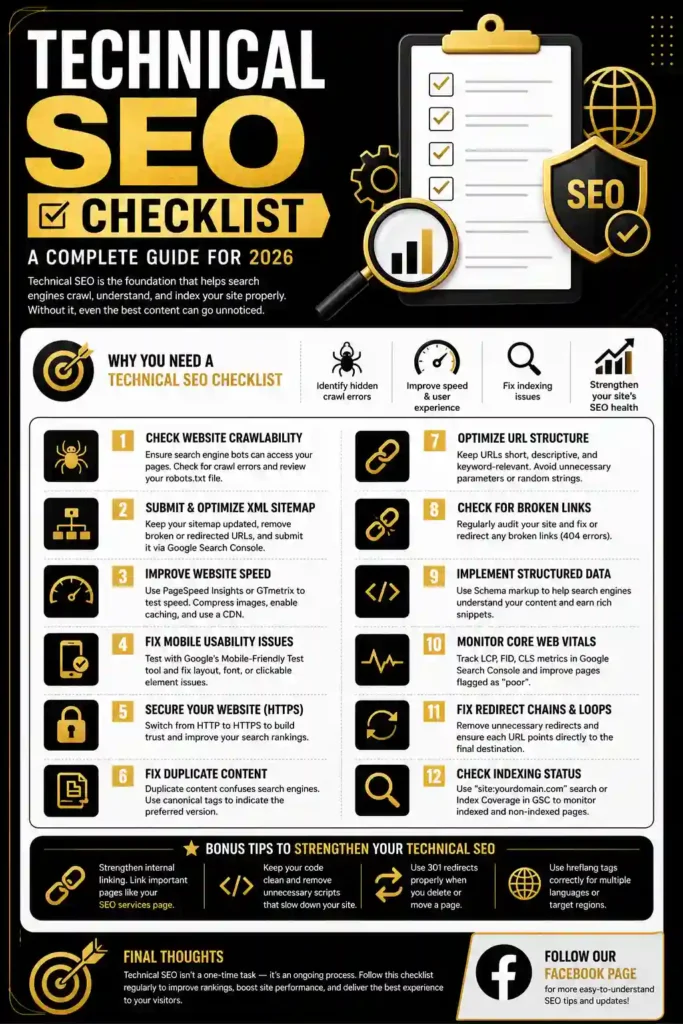
If your website isn’t ranking the way it should, the problem might not be your content — it could be something happening behind the scenes. That’s where a solid technical seo checklist comes in. Technical SEO is the foundation that lets search engines crawl, understand, and index your site properly. Without it, even the best-written content can go unnoticed.
In this guide, we’ll walk through everything you need to check, fix, and monitor to keep your website technically sound and search-engine friendly.
Why You Need a Technical SEO Checklist
Before diving into the steps, let’s understand why this matters. Search engines like Google use bots to crawl websites, and these bots need a clean, fast, and error-free path to do their job well. If your site has broken links, slow loading speed, duplicate content, or poor mobile experience, Google may struggle to rank your pages — no matter how good your writing is.
A well-structured checklist helps you:
Identify hidden crawl errors
Improve page speed and user experience
Fix indexing issues
Strengthen your site’s overall SEO health
If you’re just starting out with SEO, it also helps to first understand the basics ofWhat is Technical SEObefore jumping into technical fixes — the two work hand in hand.
The Ultimate Technical SEO Checklist
Here’s a step-by-step breakdown of what you should check regularly.
1. Check Website Crawlability
Make sure search engine bots can actually access your pages. Use Google Search Console to check for crawl errors, and review your robots.txt file to confirm you’re not accidentally blocking important pages.
2. Submit and Optimize Your XML Sitemap
Your sitemap acts like a map for search engines. Keep it updated, remove broken or redirected URLs, and submit it directly through Google Search Console.
3. Improve Website Speed
Page speed is a confirmed ranking factor. Use tools like Google PageSpeed Insights or GTmetrix to test loading time. Compress images, enable browser caching, and consider a content delivery network (CDN) if your traffic is growing.
4. Fix Mobile Usability Issues
With mobile-first indexing, Google primarily looks at the mobile version of your site. Test your pages using Google’s Mobile-Friendly Test tool and fix any layout, font, or clickable element issues.
5. Secure Your Website with HTTPS
If your site still runs on HTTP, it’s time to switch. HTTPS is a trust signal for both users and search engines, and it directly affects rankings.
6. Fix Duplicate Content and Canonical Tags
Duplicate content confuses search engines about which page to rank. Use canonical tags to point search engines to the preferred version of a page.
7. Optimize URL Structure
Keep URLs short, descriptive, and keyword-relevant. Avoid unnecessary parameters or random strings that make your links look messy.
8. Check for Broken Links (404 Errors)
Broken links hurt both user experience and crawl efficiency. Regularly audit your site using tools like Screaming Frog or Ahrefs, and fix or redirect any dead links.
9. Implement Structured Data (Schema Markup)
Schema markup helps search engines understand your content better and can improve your chances of getting rich snippets in search results — things like star ratings, FAQs, or product info.
10. Monitor Core Web Vitals
Google’s Core Web Vitals measure real-world user experience — loading performance, interactivity, and visual stability. Keep an eye on these metrics inside Google Search Console and fix any pages flagged as “poor.”
11. Fix Redirect Chains and Loops
Multiple redirects slow down page loading and waste crawl budget. Clean up your redirect chains so each URL points directly to its final destination.
12. Check Indexing Status
Use the “site:yourdomain.com” search command or Google Search Console’s Index Coverage report to see which pages are indexed — and which ones might be missing.
Bonus Tips to Strengthen Your Technical SEO
Regularly update your internal linking structure so important pages get more visibility. For example, linking to a well-optimized page like yourSEO services page helps distribute authority across your site.
Keep your website’s code clean and avoid unnecessary scripts that slow down rendering.
Set up 301 redirects properly whenever you delete or move a page.
Use hreflang tags correctly if your site targets multiple languages or countries.
Final Thoughts
Technical SEO isn’t a one-time task — it’s an ongoing process. Search engines keep updating their algorithms, and your website needs to keep up. By following this technical seo checklist regularly, you’ll not only improve your search rankings but also create a smoother, faster, and more trustworthy experience for your visitors.
Start small — fix your site speed, clean up broken links, and secure your site with HTTPS. Once the basics are solid, move on to advanced steps like schema markup and Core Web Vitals optimization.
If you found this checklist helpful, feel free to follow ourFacebook Page for more easy-to-understand SEO tips and updates. our youtube
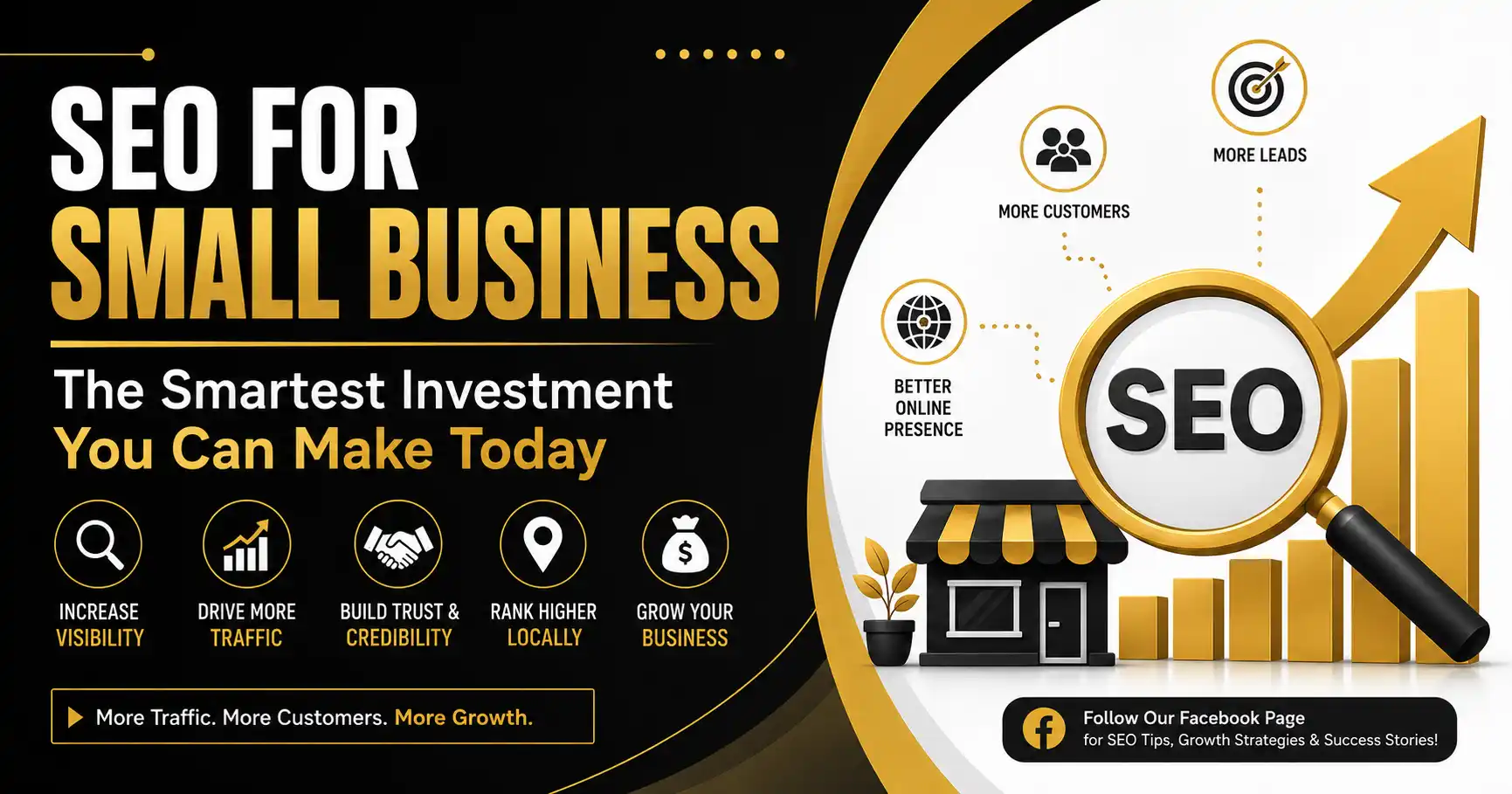
Running a small business is already a full-time job. Between managing customers, handling operations, and keeping up with day-to-day tasks, marketing often takes a back seat. But here’s the thing — if your potential customers can’t find you online, all that hard work stays invisible to the people who need your services the most. That’s exactly why SEO for small business has become one of the most talked-about growth strategies in recent years. It doesn’t require a massive budget or a big team. What it requires is a clear strategy, a bit of consistency, and the right understanding of how search engines work.
This article breaks down why SEO matters so much for small businesses, how it helps you compete with larger brands, and what you can do to start seeing real results.
Why Small Businesses Need SEO More Than Ever
Large corporations spend millions on advertising because they can afford to. Small businesses can’t always compete on budget — but with SEO, they don’t have to. SEO puts small businesses on a level playing field by rewarding relevance, quality, and consistency over raw spending power.
Here’s what that looks like in practice. When someone in your city searches for a service you offer — say, “best bakery near me” or “affordable web designer in Dhaka” — search engines look for the most relevant, trustworthy result. If your website is well-optimized, you can appear right alongside or even above bigger competitors who haven’t invested in SEO. That visibility is incredibly valuable, especially for a small business trying to grow without a massive ad budget.
Beyond visibility, SEO builds something that paid ads simply can’t — long-term credibility. When customers repeatedly see your business appearing naturally in search results, they begin to associate your brand with authority and reliability. This trust is often what converts a first-time visitor into a loyal, returning customer.
Local SEO is particularly powerful for small businesses. Most small businesses serve a specific area, and local search optimization ensures you show up when nearby customers are actively looking for what you offer. A well-optimized Google Business Profile, combined with locally relevant content on your website, can drive consistent foot traffic and phone inquiries without spending a single rupee on ads.
The other major advantage is sustainability. A blog post you write today, a service page you optimize this week, or a customer review you respond to thoughtfully — all of these contribute to your website’s authority over time. Unlike ads that disappear the moment you stop paying, SEO efforts compound. Every improvement you make adds to a growing foundation that continues generating traffic and leads long into the future.
To understand how to find the right search terms for your business, our Benefits of SEO for Business walks you through the entire process step by step.
SEO for Small Business: Where to Start and What Actually Works
Knowing that SEO is important is one thing — knowing where to actually begin is where many small business owners get stuck. The good news is, you don’t need to do everything at once. Starting with a few core areas and building from there is both practical and effective.
Start with your website basics. Make sure your website loads quickly, looks good on mobile devices, and is easy to navigate. These technical factors affect not only how search engines rank you but also how long visitors stay on your site. A slow, confusing website loses customers before they even get a chance to read what you offer.
Optimize your key pages. Your homepage, about page, and main service or product pages should clearly describe what you do, who you serve, and where you’re located. Use natural language that your customers actually use when searching. Avoid stuffing pages with keywords — write for people first and search engines second.
Create helpful content consistently. A simple blog where you answer common customer questions is one of the most effective SEO strategies for small businesses. It positions you as an expert, attracts organic traffic, and gives search engines fresh content to index regularly.
Build your local presence. Claim your Google Business Profile, ensure your business name, address, and phone number are consistent across all online directories, and actively encourage happy customers to leave reviews. These small steps have an outsized impact on local search visibility.
Get backlinks from trusted sources. When other reputable websites link to yours, it signals to search engines that your business is credible. You can earn backlinks by getting listed in local directories, partnering with complementary businesses, or creating content that others genuinely want to share.
Track your progress. Use free tools like Google Search Console and Google Analytics to monitor which pages are bringing in traffic, what keywords people use to find you, and where visitors drop off. This data takes the guesswork out of your strategy and helps you focus on what’s actually working.
For a full breakdown of on-page optimization techniques every small business should know, check out ourWhat is Search Engine Optimization it’s designed specifically for businesses just getting started.
Final Thoughts
SEO for small business isn’t about overnight success — it’s about building something that grows stronger with every passing month. The businesses that commit to it consistently are the ones that eventually dominate their local market and attract a steady stream of organic customers without relying on expensive ads.
You don’t need a big agency or a huge budget. You need clarity, consistency, and a willingness to keep improving. Start small, stay focused, and let the results build over time.
Follow ourFacebook Page for practical SEO tips, small business growth strategies, and real success stories shared every week.
Building a successful brand is about much more than creating a beautiful logo or choosing attractive colours. I have seen many businesses invest heavily in products and marketing but still struggle to stand out because their brand message is unclear.
A strong brand helps customers recognise a business, trust its values, and remember its story. This is where professional branding agencies help companies create a clear identity and build meaningful connections with their audience.
I have researched some of the leading companies that are known for their creativity, brand strategy, and ability to transform businesses. In this guide, I will share the best branding agencies in the world that businesses should know in 2026 and explain what makes these companies different from others in the industry.
What You Will Learn:
What makes a branding agency successful
How top branding companies help businesses grow
The 15 leading branding agencies to know in 2026
How to choose the right partner for your brand
Why professional branding matters for long-term growth
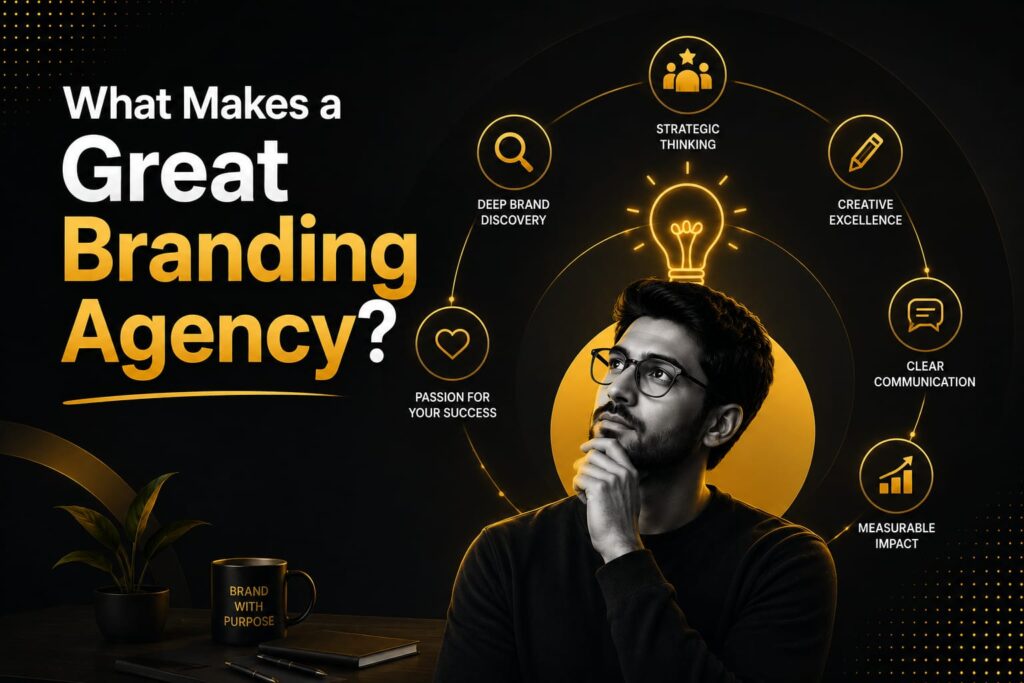
What Makes a Great Branding Agency?
Before choosing a branding partner, I believe businesses should understand what separates an average agency from an exceptional one. Whether I am researching the best branding agencies in the world or comparing smaller firms, I always look beyond impressive portfolios.
A great branding company does not focus only on visual design. It studies the market, understands customer behaviour, and creates a brand identity that supports real business goals. This is exactly what makes a good branding agency stand out from the competition.
For startups and growing companies, selecting the right partner can make a significant difference. If I am looking for the best branding agencies in the world for startups or exploring the top branding agencies for small businesses, I pay close attention to their experience, creative process, and ability to deliver measurable results.
Here are some of the key factors I consider when deciding how to choose a branding agency and finding the best brand identity agency for businesses.
Strong Brand Strategy
A successful brand starts with a clear strategy. Professional agencies analyse competitors, target audiences, and market trends before creating a brand direction.
Without proper planning, even a creative design can fail to create a strong impression.
Creative Identity Development
A brand identity includes more than a logo. It covers:
Visual style
Typography
Colour selection
Brand voice
Customer experience
The best agencies create consistent branding that customers can recognise across different platforms.
Industry Experience
Experience matters. Agencies that have worked with global brands usually understand how to handle different markets and customer expectations.
Ability to Adapt
Branding has changed significantly. Businesses now need identities that work across websites, social media, mobile platforms, and digital campaigns.
Top 15 Best Branding Agencies in the World (2026)
Interbrand
Interbrand is one of the most recognised brand consulting companies globally. The agency is known for helping businesses improve brand value through research, strategy, and creative solutions.
Their services include:
Brand strategy
Brand valuation
Customer experience
Visual identity
Many global companies choose Interbrand because of its strong focus on business growth and customer perception.
Pentagram
Pentagram is a well-known independent design studio with a strong reputation for creative branding projects.
The agency works on:
Brand identity
Graphic design
Digital experiences
Marketing visuals
I like Pentagram’s approach because it combines creativity with practical business goals.
Landor
Landor helps companies transform their brands through research, strategy, and design.
The agency focuses on:
Brand positioning
Naming
Identity creation
Customer experience
Their work shows how a clear brand direction can help businesses compete in crowded markets.
Wolff Olins
Wolff Olins is known for creating bold and memorable brand identities.
The agency works with companies that want to create a different market position through creative thinking.
Their expertise includes:
Brand strategy
Digital branding
Experience design
FutureBrand
FutureBrand focuses on helping businesses create brands prepared for future challenges.
Their services include:
Brand development
Brand architecture
Visual identity
They help companies create identities that remain relevant as customer expectations change.
Siegel+Gale
Siegel+Gale is famous for its simplicity-focused branding approach.
The agency believes that clear communication creates stronger customer relationships.
Their expertise includes:
Brand strategy
Customer experience
Design systems
Lippincott
Lippincott combines research, strategy, and design to create powerful brand experiences.
The company works with businesses on:
Brand transformation
Innovation
Identity design
Their approach helps companies create brands that customers can easily understand and trust.
AKQA
AKQA is recognised for combining creativity with technology.
The agency creates:
Digital experiences
Brand campaigns
Creative technology solutions
For businesses focused on digital growth, AKQA offers a modern branding approach.
MetaDesign
MetaDesign helps companies create strong brand systems that work across different channels.
Their services include:
Corporate branding
Digital design
Brand communication
They focus on creating consistent brand experiences.
Mucho
Mucho is a creative branding studio known for unique visual identities.
Their work includes:
Logo design
Packaging
Brand identity
The agency shows how thoughtful design can make a business more memorable.
DesignStudio
DesignStudio creates brand identities for companies looking to improve their market presence.
Their services include:
Brand strategy
Creative direction
Visual systems
They focus on creating brands that connect emotionally with customers.
Saffron Brand Consultants
Saffron helps companies improve their identity through strategic branding and design.
Their services include:
Brand transformation
Brand experience
Identity development
They work with businesses that want to create stronger customer connections.
Collins
Collins is an award-winning branding agency known for creative and strategic projects.
The agency helps businesses with:
Brand identity
Creative direction
Design systems
Their work focuses on creating memorable brand experiences.
Moving Brands
Moving Brands creates digital-first branding solutions for modern businesses.
Their expertise includes:
Digital products
Brand identity
Creative strategy
They help companies build brands that work well in online environments.
Ragged Edge
Ragged Edge is known for creating distinctive brand identities.
The agency focuses on:
Brand strategy
Naming
Visual identity
Their creative style helps businesses develop a unique position in competitive industries.
How Do I Choose the Right Branding Agency?
Choosing a branding partner is an important decision. I believe the best branding agencies in the world do more than create attractive visuals. They take time to understand a business, identify its goals, and build a brand that supports long-term growth. If you’re wondering how to choose a branding agency, these factors can help you make a confident decision.
Understand Your Goals
Start by defining what you want to achieve.
Are you launching a new business? Refreshing your existing brand? Expanding into a new market?
Clear objectives make it easier to find the best branding agencies in the world for startups or experienced firms that match your business stage and future plans.
Review Their Previous Work
An agency’s portfolio reveals its creativity, industry experience, and ability to solve real business challenges.
Look for projects similar to your industry and evaluate whether their work delivers consistent branding. Many top branding agencies for small businesses showcase case studies that demonstrate measurable results rather than just attractive designs.
Check Their Process
A reliable agency should understand your audience before creating logos or visual assets.
Ask about their:
Research methods
Brand strategy process
Communication style
Client collaboration
These steps will help you understand what makes a good branding agency and whether its approach aligns with your business goals.
Consider Long-Term Value
Branding is a long-term investment, not a one-time expense. Choosing the lowest-priced option may save money today, but it could limit your brand’s growth in the future.
Instead, focus on finding the best brand identity agency for businesses that offers a balance of strategy, creativity, and ongoing support. The right partner can build a memorable brand that continues to deliver value as your business grows.
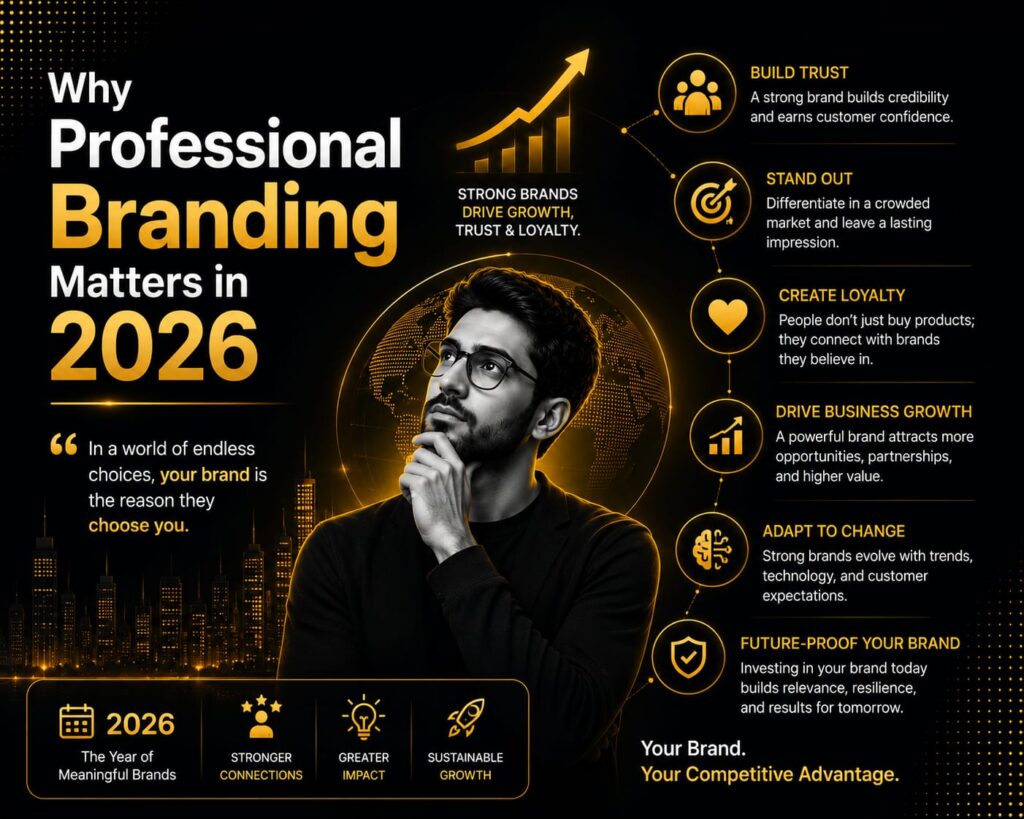
Why Professional Branding Matters in 2026
Competition is increasing across almost every industry. Businesses need more than great products or services to capture customer attention.
Partnering with one of the best branding agencies in the world can help businesses create a memorable identity, build credibility, and establish a stronger market presence.
A strong brand helps companies:
Build customer trust
Improve brand recognition
Create stronger customer connections
Stand apart from competitors
I believe businesses that invest in professional branding have a better chance of achieving long-term success because customers remember experiences, not just products.
If you are comparing the best branding agencies in the world for startups, looking for top branding agencies for small businesses, or wondering how to choose a branding agency, understanding an agency’s experience, creative process, and industry expertise can make the decision much easier. Knowing what makes a good branding agency also helps you find the best brand identity agency for businesses that matches your goals.
For more expert recommendations and detailed comparisons, explore my guide on the best branding agencies in the world.
Frequently Asked Questions
What is the best branding agency in the world?
There is no single agency that works best for every business. The right choice depends on goals, budget, industry, and brand requirements.
What services do branding agencies provide?
Most agencies provide brand strategy, identity design, market research, naming, and customer experience solutions.
How much does branding cost?
Costs vary depending on project size, agency experience, and business needs.
Is hiring a branding agency worth it?
Yes. A professional agency can help businesses create a clear identity and improve customer trust.
Conclusion
The best branding agencies in the world help businesses create identities that customers remember. They combine creativity, research, and strategic thinking to build brands that support long-term growth.
Whether you are a startup, a small business, or an established company, choosing the right partner can make a real difference. If you’re searching for the best branding agencies in the world for startups or comparing the top branding agencies for small businesses, focus on finding a team that understands your goals and industry.
Knowing how to choose a branding agency is just as important as selecting one. Look for experience, a strong portfolio, clear communication, and proven results. These qualities are also what makes a good branding agency and can help you build a brand that stands out.
If your priority is creating a memorable visual identity and consistent brand experience, working with the best brand identity agency for businesses can give you a solid foundation for future growth. A logo may introduce your business, but a complete branding strategy is what helps customers remember and trust your brand.
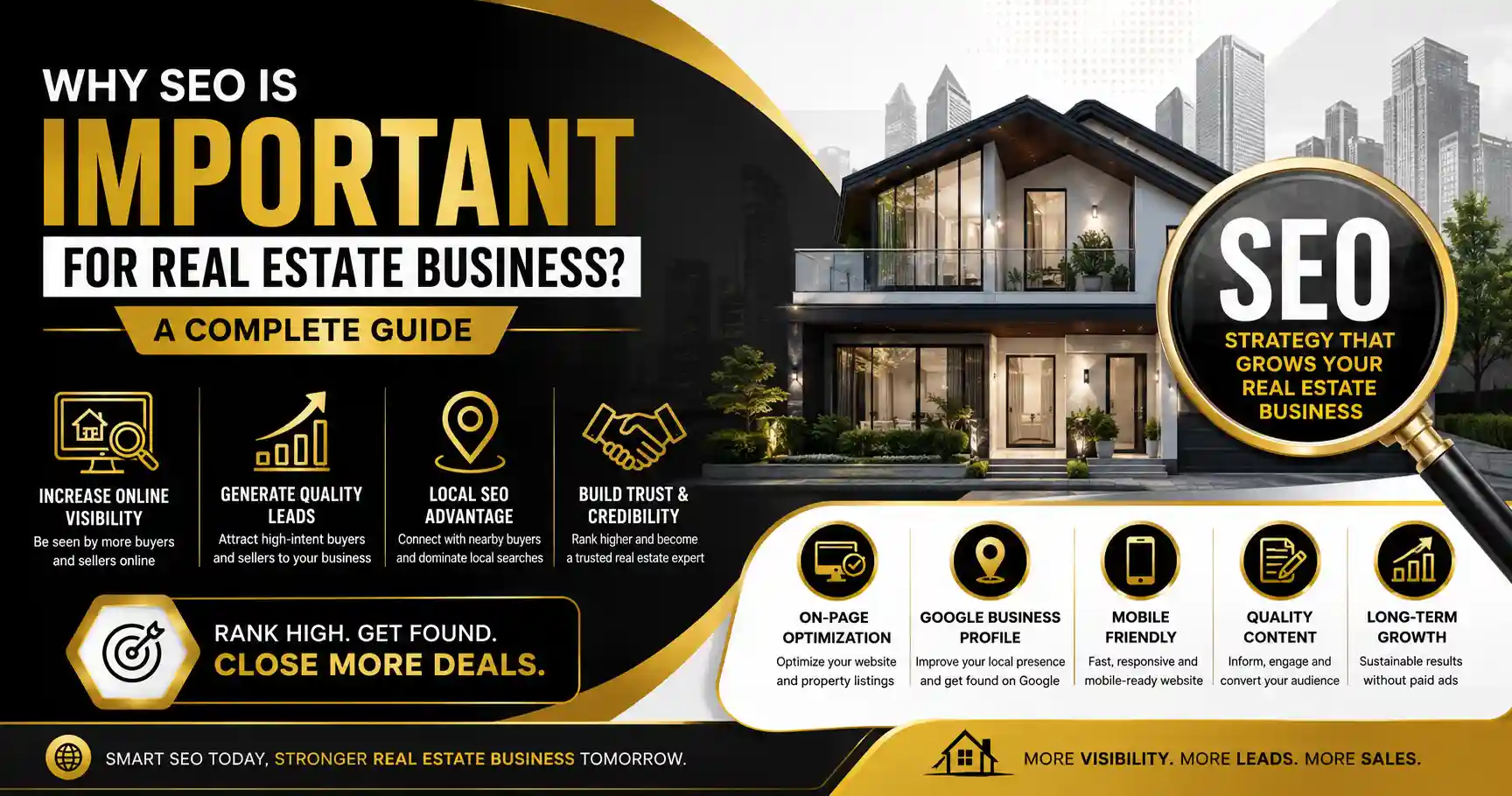
The real estate industry has changed dramatically over the last decade. Buyers and sellers no longer rely solely on newspaper listings or walk-in visits they start their journey with a simple Google search. If your real estate business isn’t visible in those search results, you’re losing potential clients to competitors who are. This is exactly where SEO (Search Engine Optimization) becomes a game-changer.
In this article, we’ll break down why SEO matters so much for real estate businesses and how it can directly impact your growth, credibility, and revenue.
What Is SEO in Real Estate?
SEO for real estate means optimizing your website, listings, and online content so that they rank higher on search engines like Google when people search for terms like “homes for sale in [city]” or “best real estate agent near me.” It involves keyword research, on-page optimization, local SEO, content marketing, and technical improvements to your website.
1. Most Home Buyers Start Their Search Online
Today, the vast majority of property buyers begin their home-search journey with an online search engine before ever contacting an agent. If your website doesn’t appear on the first page of results, you’re essentially invisible to a huge portion of potential clients no matter how great your listings are.
2. SEO Builds Long-Term, Cost-Effective Visibility
Unlike paid ads that stop generating traffic the moment you stop paying, SEO delivers long-term, sustainable results. Once your website ranks well for key terms, it continues attracting organic traffic without ongoing ad spend. Over time, this makes SEO one of the most cost-effective marketing strategies for real estate businesses, especially compared to pay-per-click campaigns.
3. Local SEO Connects You with Nearby Buyers and Sellers
Real estate is inherently local. People searching for “apartments for rent in Dhaka” or “3-bedroom houses in [neighborhood]” want hyper-local results. A strong local SEO strategy including Google Business Profile optimization, local keywords, and location-specific landing pages helps you appear in local map packs and location-based searches, putting you directly in front of buyers and sellers in your target area.
4. It Builds Trust and Credibility
Websites that rank at the top of search results are often perceived as more credible and trustworthy by users. Ranking high signals to potential clients that your agency is established, active, and reputable. High-quality, SEO-optimized content such as neighborhood guides, market trend reports, and buyer/seller tips further positions you as an authority in your local market.
5. SEO Generates Higher Quality Leads
SEO doesn’t just bring more traffic it brings the right traffic. People searching for specific, intent-driven terms like “buy condo downtown [city]” are much further along in their decision-making process than someone scrolling social media. These visitors are more likely to convert into actual leads and clients, improving your overall ROI.
6. Mobile and Voice Search Optimization Matters More Than Ever
With more buyers searching for properties on their phones and increasingly through voice assistants having a mobile-friendly, fast-loading, SEO-optimized website is essential. Google prioritizes mobile-first indexing, meaning your site’s mobile performance directly affects your search rankings.
7. SEO Gives You a Competitive Edge
The real estate market is highly competitive. Agencies and agents who invest in SEO gain a significant advantage over those who rely only on traditional marketing or paid ads. Ranking above competitors for valuable keywords means capturing more market share and staying top-of-mind for buyers and sellers in your area.
8. Content Marketing Keeps You Relevant
SEO isn’t just about keywords it’s also about consistently publishing valuable content: blog posts, neighborhood spotlights, market updates, and home-buying guides. This kind of content marketing supports your SEO efforts while keeping your audience engaged and coming back for more information, eventually turning into leads.
Key SEO Strategies Every Real Estate Business Should Use
Keyword research: Target location-based and intent-driven keywords (e.g., “buy apartment in [city]”).
On-page optimization: Optimize titles, meta descriptions, headers, and images on property listing pages.
Local SEO: Claim and optimize your Google Business Profile, gather reviews, and build local citations.
Quality backlinks: Get listed on trusted local directories and real estate platforms.
Mobile optimization: Ensure fast loading speed and mobile responsiveness.
Content creation: Publish blogs, guides, and market reports regularly.
Technical SEO: Fix broken links, improve site structure, and use schema markup for property listings.
Final Thoughts
SEO is no longer optional for real estate businesses it’s a necessity. From increasing visibility and generating quality leads to building trust and staying ahead of competitors, a solid SEO strategy can transform how your business attracts and converts clients. Investing time and resources into SEO today means building a sustainable pipeline of buyers and sellers for years to come.
If you’re a real estate agent or agency looking to grow your online presence, now is the time to start optimizing your website and content for search engines — your future clients are already searching for you.
Why Is Design Important in Marketing? In today’s digital world, people often decide whether they trust a business in just a few seconds. Before they read your content, check your prices, or contact your team, they notice one thing first your design.
A professional design can make your business look trustworthy, while a poor design can drive potential customers away. That’s why design is no longer just about making things look attractive. It has become one of the most powerful tools in modern marketing.
Whether you’re running a small business, an online store, or a large company, investing in good design can help you attract more customers, strengthen your brand, and increase sales.
In this guide, you’ll learn why design is important in marketing, how it influences customer decisions, and how your business can use design to achieve better results
Table of Contents
What Is Marketing Design?
Why Design Matters in Marketing
Benefits of Good Marketing Design
How Design Influences Customer Decisions
Design and Brand Identity
Common Marketing Design Mistakes
Best Practices for Effective Marketing Design
Frequently Asked Questions
Conclusion
What Is Marketing Design?
Marketing design is the process of creating visual content that helps businesses communicate with their audience.
It includes everything customers see, including:
Website design
Landing pages
Social media posts
Online advertisements
Logos
Brand identity
Email newsletters
Business cards
Brochures
Product packaging
Presentation slides
Marketing design combines creativity with strategy. Its purpose is not only to make something look good but also to encourage people to take action.
Why Design Is Important in Marketing
1. Design Creates a Strong First Impression
First impressions matter.
Studies show that people form opinions about a website within seconds. If your website looks outdated or difficult to use, visitors may leave before learning anything about your business.
A clean and professional design immediately communicates quality and professionalism.
When people trust what they see, they are more likely to continue exploring your website.
2. Design Builds Brand Trust
Customers prefer businesses that look reliable.
Professional branding with consistent colors, fonts, and graphics creates confidence.
When every part of your business looks consistent, customers feel they are dealing with an established company rather than an unreliable one.
Trust is one of the biggest reasons people choose one business over another.
3. Design Makes Your Brand Memorable
Think about famous companies.
You probably recognize them by their logo, colors, or visual style before you even read their name.
That’s the power of branding.
Consistent marketing design helps customers remember your business, making it easier for them to return when they need your products or services.
4. Design Improves User Experience
Good marketing isn’t only about attracting visitors.
It’s also about helping them find information quickly.
Good design improves navigation by making your website:
Easy to read
Easy to navigate
Mobile-friendly
Fast-loading
Organized
When visitors have a positive experience, they stay longer and are more likely to become customers.
5. Design Increases Conversion Rates
Marketing success isn’t measured by traffic alone.
It depends on how many visitors become paying customers.
Professional design helps guide users toward important actions such as:
Contacting your business
Booking a consultation
Purchasing a product
Filling out a form
Downloading a guide
Clear layouts, readable typography, and strong call-to-action buttons can significantly improve conversion rates.
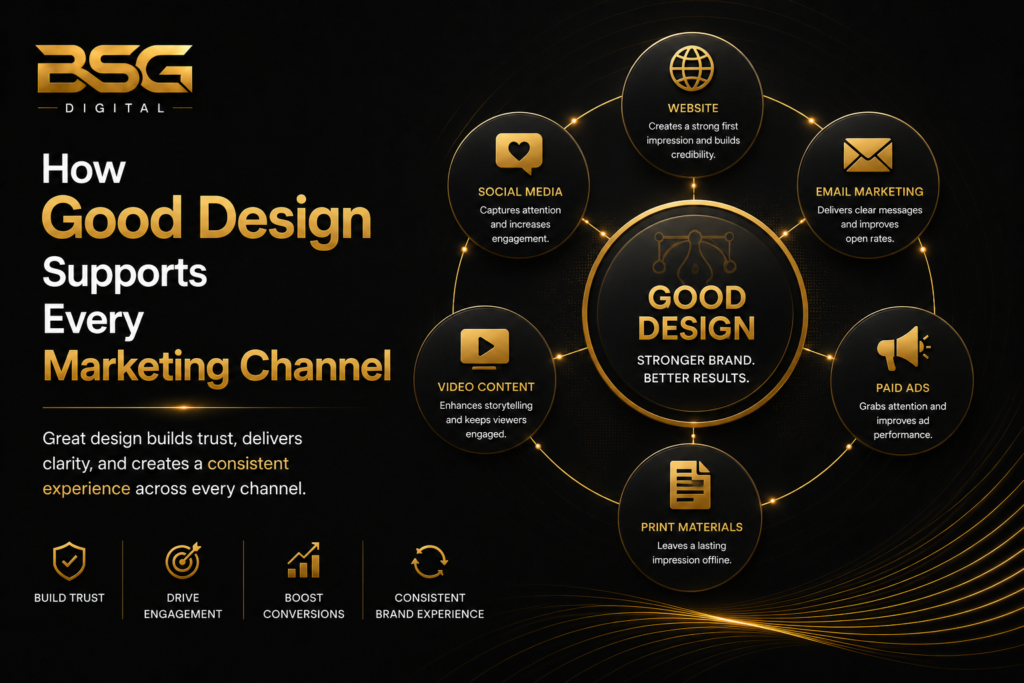
How Good Design Supports Every Marketing Channel
Professional marketing design helps businesses build trust and increase conversions.
Website Marketing
Your website acts as your digital storefront.
A modern website creates confidence and encourages visitors to explore your services.
Attractive social media graphics receive more attention.
Well-designed posts often generate:
More likes
More comments
More shares
Better engagement
Content Marketing
Even great articles can be ignored if they look difficult to read.
Using proper headings, images, white space, and formatting makes your content easier to consume.
Readers spend more time on pages that are visually organized.
Email Marketing
Professionally designed email campaigns improve:
Open rates
Click-through rates
Customer engagement
Brand recognition
Paid Advertising
Good ad design grabs attention instantly.
Clear headlines, attractive visuals, and strong call-to-action buttons help improve advertising performance.
Design and Brand Identity
Many people believe branding is only about creating a logo.
Actually, branding is the complete visual identity of your business.
It includes:
Logo
Color palette
Typography
Graphic style
Photography
Icons
Layout consistency
A strong brand identity helps customers recognize your business everywhere.
This consistency builds familiarity, and familiarity builds trust.
How Design Influences Customer Decisions
Marketing Design Guide
Every buying decision involves emotion.
People naturally feel more confident purchasing from businesses that appear professional.
Good design communicates:
Quality
Expertise
Reliability
Attention to detail
Poor design creates uncertainty.
If customers don’t trust your presentation, they may not trust your products or services either.
Common Marketing Design Mistakes
Many businesses unknowingly lose customers because of poor design choices.
Avoid these common mistakes:
Using too many fonts
Inconsistent colors
Low-quality images
Cluttered layouts
Weak branding
Small text
Poor mobile responsiveness
Slow-loading graphics
Confusing navigation
Unclear call-to-action buttons
Improving even a few of these areas can have a noticeable impact on your marketing performance.
Best Practices for Effective Marketing Design
To create better marketing materials:
Keep layouts simple and clean.
Maintain consistent branding.
Use professional typography.
Choose high-quality images.
Optimize every design for mobile devices.
Add enough white space.
Highlight important information.
Make call-to-action buttons easy to find.
Focus on readability before decoration.
Test and improve your designs regularly.
Remember, good design is about solving problems not adding unnecessary visual effects.
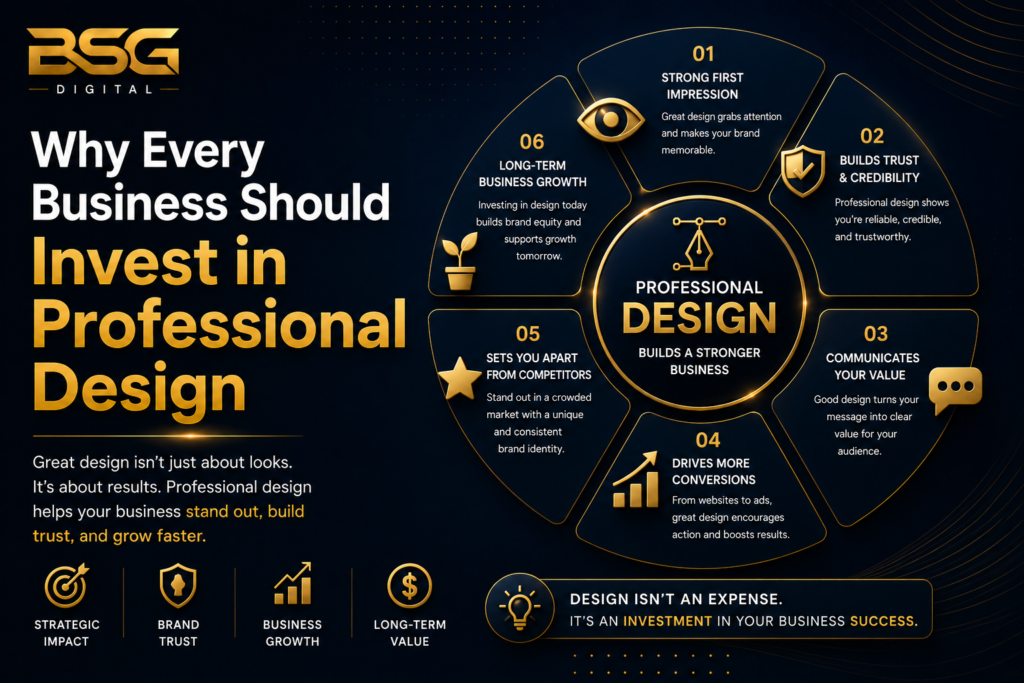
Why Every Business Should Invest in Professional Design
Professional marketing design helps businesses build trust and increase conversions.
Professional design is an investment rather than an expense.
It helps businesses:
Build trust
Improve customer experience
Increase website engagement
Generate more leads
Boost sales
Strengthen brand awareness
Improve long-term business growth
Companies that consistently invest in quality design often see better marketing performance over time.
Conclusion
Design plays a critical role in every successful marketing strategy.
It shapes first impressions, strengthens your brand, builds trust, improves user experience, and increases conversions.
No matter the size of your business, investing in professional marketing design can help you stand out in a competitive market.
Remember, customers don’t just buy products or services they buy confidence, trust, and experience. Great design helps you deliver all three.
If you want your marketing efforts to produce better results, start by improving your design.
FAQ
Why is design important in marketing?
Design helps businesses create a strong first impression, build trust, improve user experience, and increase conversions.
Does design affect SEO?
Yes. A well-designed website improves user experience, reduces bounce rates, increases engagement, and supports better SEO performance.
How does design influence customer behavior?
Professional design creates confidence and encourages visitors to stay longer, interact with your content, and make purchasing decisions.
What is marketing design?
Marketing design is the creation of visual materials that support branding, communication, and marketing goals across websites, social media, advertisements, emails, and print materials.
Why is branding important in marketing?
Branding helps customers recognize and remember your business, creating trust and long-term loyalty.
Many people ask, “Is branding only a logo?” I used to hear this question often, especially from new business owners. It’s easy to assume that a professional-looking logo is all a business needs. While a logo is important, it tells only a small part of the story.
When I look at successful businesses, I notice something interesting. People don’t stay loyal because of a logo alone. They return because they trust the business, enjoy the experience, and connect with its values. That’s why understanding branding beyond a logo matters. Once I explain how branding differs from logo design, many business owners begin to see their company in a completely new way.
What You’ll Learn
The difference between a logo and a brand
Why a logo alone cannot build customer trust
The main elements of a strong brand
Common branding mistakes I often seeWhat Does a Logo Actually Do?
A logo has one main job: helping people recognize a business.
It appears on websites, business cards, packaging, and social media profiles. A good logo is simple, memorable, and easy to identify.
However, even the best logo cannot answer important questions like:
Can I trust this business?
Does it deliver quality?
Will I receive good customer service?
Does this company share my values?
Those answers come from branding, not from the logo itself.
Simple ways to build a memorable brand
What Does a Logo Actually Do?
A logo has one main job: helping people recognize a business.
It appears on websites, business cards, packaging, and social media profiles. A good logo is simple, memorable, and easy to identify.
However, even the best logo cannot answer important questions like:
Can I trust this business?
Does it deliver quality?
Will I receive good customer service?
Does this company share my values?
Those answers come from branding, not from the logo itself.
Branding Is Bigger Than Visual Design
When I help businesses improve their online presence, I always explain that branding goes far beyond colors and graphics.
A strong brand includes:
A clear mission
Consistent messaging
A unique voice
Reliable customer service
Positive customer experiences
A trustworthy reputation
When all of these work together, people start remembering the business for more than its appearance.
Branding vs. Logo: What’s the Difference?
Many people use these terms interchangeably, but they are different.
A logo is a visual symbol.
A brand is the complete experience people have with a business.
Think of it this way. A logo introduces the business. Branding gives customers a reason to stay.
That’s why companies with ordinary-looking logos can still become household names. They consistently deliver value and create positive experiences.
Why Branding Matters More Than Ever
Customers have endless choices today. If two businesses offer similar products, people often choose the one they trust more.
Many business owners still ask, “Is branding only a logo?” My answer is always no. A logo may help people recognize a business, but it cannot build trust on its own.
Trust doesn’t appear overnight. It grows through consistent communication, quality service, honest messaging, and positive customer experiences. That’s why understanding branding beyond a logo is so important for any business that wants long-term success.
I also believe that how branding differs from logo design is something every entrepreneur should understand. A logo is just one visual element, while branding reflects the entire customer experience.
When people ask me what makes a strong brand identity, I explain that it comes from a clear purpose, consistent messaging, memorable experiences, and genuine customer relationships. These are the reasons businesses need branding, not just a logo, if they want customers to remember and trust them.
If you’re looking for a complete guide to branding vs logo, the most important lesson is simple: people may notice your logo first, but they’ll return because of the experience your brand delivers.
A Simple Example
Imagine two coffee shops.
Both have attractive logos.
The first shop serves excellent coffee, greets customers warmly, and responds quickly to feedback.
The second shop has stylish branding materials but poor service.
Which one would you visit again?
Most people would choose the first. The logo may attract attention, but the experience earns loyalty.
That’s the real meaning of branding.
How I Build a Strong Brand
Over the years, I have learned that a strong brand doesn’t happen by accident. It grows through consistent effort and clear communication. Here are the steps I always recommend.
1. Know Your Purpose
Before creating marketing materials, I ask one simple question:
Why does my business exist?
The answer guides every decision I make. A clear purpose helps customers understand what my business stands for.
2. Understand My Audience
I cannot speak to everyone.
Instead, I focus on the people I want to help. I learn about their needs, challenges, and expectations. This makes my message more relevant and easier to understand.
3. Keep Everything Consistent
Consistency builds familiarity.
I use the same tone, colours, fonts, and messaging across my website, social media, and marketing materials. When customers see the same style everywhere, they begin to recognize my business quickly.
4. Deliver a Great Experience
A promise means very little if I fail to keep it.
Fast responses, helpful support, quality products, and honest communication all contribute to a positive experience. Happy customers often become repeat customers.
5. Listen to Feedback
No business is perfect.
I pay attention to reviews and customer suggestions because they help me improve. Sometimes the smallest change creates the biggest difference.
Common Branding Mistakes I Often See
Many businesses invest heavily in design but forget everything else.
Some common mistakes include:
Focusing only on a logo.
Using different messages across platforms.
Ignoring customer feedback.
Copying competitors instead of developing a unique identity.
Promising more than they can deliver.
These mistakes make it difficult for customers to trust a business.
Can a Small Business Build a Great Brand?
Absolutely.
A large budget is helpful, but it isn’t required.
Some of the strongest brands started as small local businesses. They earned loyal customers by providing excellent service, communicating honestly, and delivering consistent quality.
People remember how a business treats them far more than how expensive its logo looks.
My Advice for Business Owners
If I had to give one piece of advice, it would be this:
Don’t spend all your time choosing the perfect logo while ignoring the customer experience.
A beautiful design may attract attention for a moment, but trust keeps people coming back.
Every email, phone call, social media post, and customer interaction becomes part of the brand people remember.
If you’d like to explore this topic further, I also recommend reading my related guide on branding, which explains why a business is much more than its visual identity: https://din-studio.com/branding-is-not-just-a-logo/
Frequently Asked Questions
Is a logo enough to build a successful business?
No. A logo helps customers recognize a business, but long-term success depends on trust, quality, communication, and customer experience.
Why do customers remember certain brands?
People often remember how a business made them feel. Positive experiences create stronger memories than visual design alone.
Can branding increase customer loyalty?
Yes. When customers trust a business and enjoy consistent experiences, they are much more likely to return and recommend it to others.
Should I change my logo regularly?
Usually, no. A logo should remain recognizable. Small updates may be useful over time, but frequent changes can confuse customers.
Final Thoughts
If you want people to remember your business for the right reasons, focus on building meaningful relationships instead of relying only on visual design. Is branding only a logo? My answer is no. A logo is an important part of a business, but it cannot define the entire brand on its own. Understanding branding beyond a logo helps create trust, recognition, and lasting customer loyalty. Once I understood how branding differs from logo design, I realized what makes a strong brand identity goes far beyond colours, fonts, or symbols. That’s also why businesses need branding not just a logo if they want long-term success. I hope this complete guide to branding vs logo helps you see the bigger picture and build a brand that people genuinely remember.
Let’s be honest—your website is often the very first impression people get of your business. Before someone calls you, visits your store, or sends an email, they Google you. And what they find in those first three seconds decides whether they trust you or click away to a competitor instead.
That’s exactly why choosing the right web development services isn’t just a “nice to have” anymore. It’s the backbone of how modern businesses survive, compete, and grow online.
In this article, I’ll walk you through what good web development really means today, why so many businesses get it wrong, and how to pick a team that won’t just build you a website—but build you a digital asset that actually works for your business.
Why Web Development Services Matter More Than Ever
A lot of business owners still think of a website as a digital business card—something you put up once and forget about. That mindset is outdated, and honestly, it’s costing businesses real money.
Here’s the truth: your website is a 24/7 salesperson. It works while you sleep, answers questions before customers even ask them, and either builds trust or destroys it within seconds. A slow, outdated, or confusing website pushes people straight into your competitor’s hands.
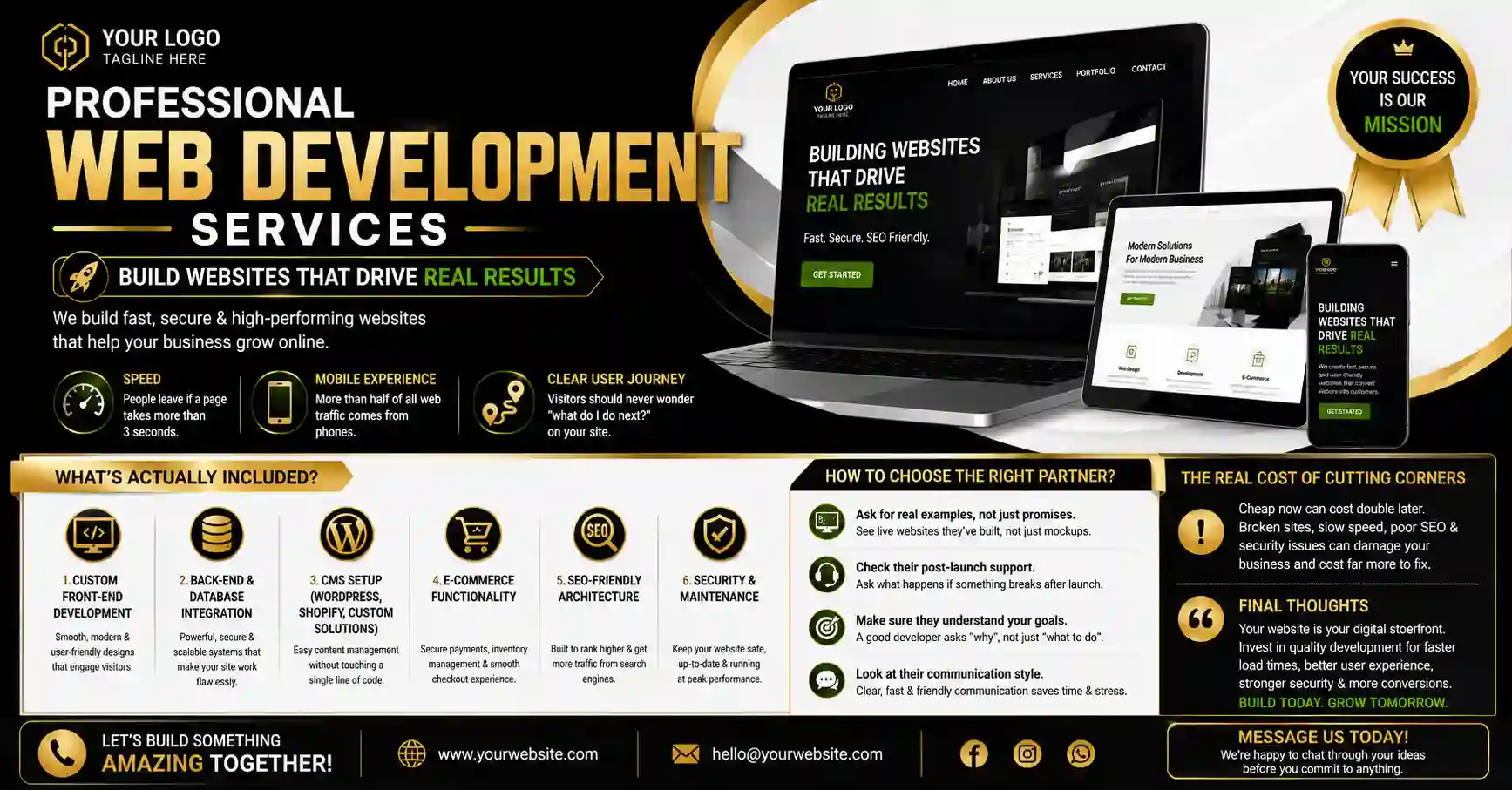
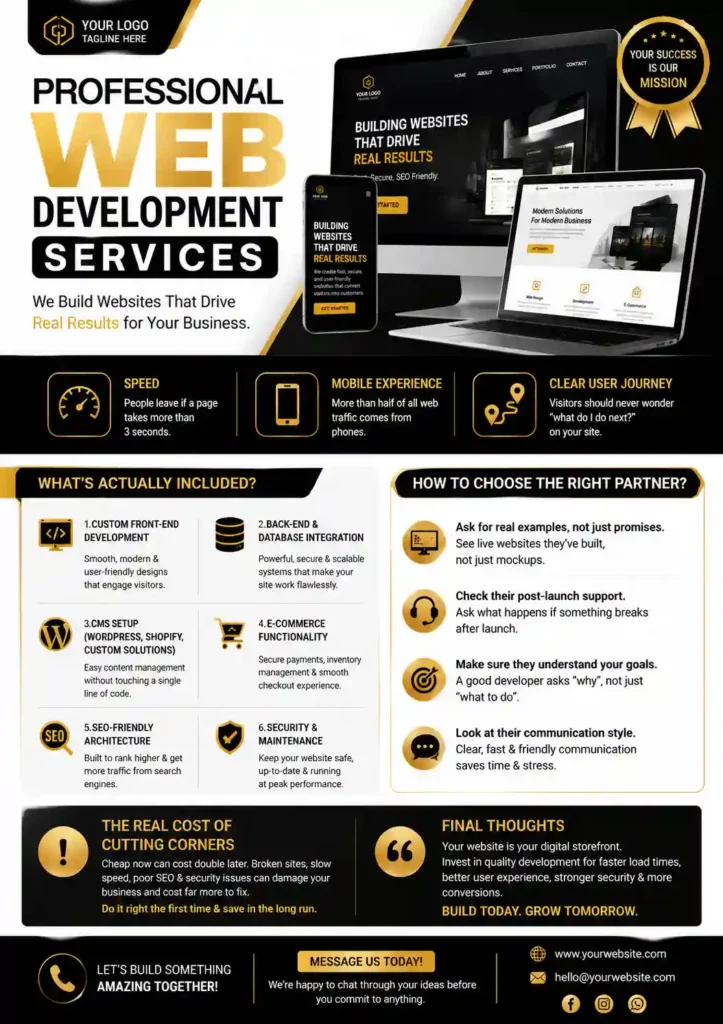
Good web development services solve this by focusing on three things that actually matter:
Speed – People leave if a page takes more than 3 seconds to load. No exceptions.
Mobile experience – More than half of all web traffic comes from phones. If your site isn’t built mobile-first, you’re losing customers daily.
Clear user journey – Visitors should never wonder “what do I do next?” on your site.
When these three pillars are handled properly, your website stops being a static page and starts becoming a real growth engine.
Web Development Services: What’s Actually Included
This is where a lot of confusion happens. People hear “web development” and assume it just means “making a website look nice.” But that’s only design. Development is the engine underneath the hood—the part that makes everything actually function smoothly.
A complete web development service typically covers:
1. Custom Front-End Development This is everything the user sees and interacts with—buttons, menus, animations, layouts. It needs to feel smooth and intuitive, not clunky or confusing.
2. Back-End & Database Integration This is the invisible part that makes your site actually work—storing data, processing forms, managing logins, handling payments. Without solid back-end work, even a beautiful website breaks down fast.
3. CMS Setup (WordPress, Shopify, Custom Solutions) Most businesses need to update content themselves—new blog posts, new products, new offers. A good developer sets up a system that lets you do this without touching a single line of code.
4. E-commerce Functionality If you’re selling products or services online, this includes secure payment gateways, inventory management, and a checkout process that doesn’t scare customers away halfway through.
5. SEO-Friendly Architecture This is huge and often overlooked. A site can look stunning but be invisible on Google because of poor technical structure. Proper URL structures, fast loading speed, clean code, and mobile responsiveness all directly affect your search rankings. If you want to understand how this connects with content strategy, check out our guide on SEO best practices for a deeper breakdown.
6. Security & Maintenance Hacked websites, broken links, expired SSL certificates—these aren’t rare problems. They happen constantly to neglected sites. Ongoing maintenance keeps your business protected and your visitors safe.
How to Choose the Right Web Development Partner
Not all developers are created equal, and price alone shouldn’t be your deciding factor (a cheap website that breaks in six months isn’t actually cheap).
Here’s what to actually look for:
Ask for real examples, not just promises. Any decent agency or freelancer should be able to show you live websites they’ve built—not just mockups or screenshots.
Check their post-launch support. Websites aren’t “set and forget.” Ask directly: what happens if something breaks two months after launch? If the answer is vague, that’s a red flag.
Make sure they understand your business goals. A good developer doesn’t just take instructions—they ask why. Why do you want a contact form there? Why this color scheme? What’s the actual goal of this page? If they’re not asking these questions, they’re just executing tasks, not building a strategy.
Look at their communication style. You’ll be working closely with this person or team for weeks, sometimes months. If communication feels slow or confusing now, it won’t magically improve after you’ve signed the contract.
If you’re still comparing options, our website development pricing guide breaks down what you should realistically expect to pay based on project complexity.
The Real Cost of Cutting Corners
I’ve seen this story play out too many times: a business goes with the cheapest option to “save money,” and six months later they’re paying double to fix what was done wrong the first time—broken mobile layouts, security vulnerabilities, slow load times that tank their SEO rankings.
Web development is one of those areas where doing it right the first time genuinely saves you money long-term. Think of it like building a house. You can cut corners on the foundation, sure—but eventually, cracks show up, and fixing them later costs far more than building it properly from day one.
Final Thoughts
Your website isn’t just a digital brochure anymore—it’s often the deciding factor between a customer choosing you or your competitor. Investing in proper web development servicesmeans investing in faster load times, better user experience, stronger security, and ultimately, more conversions.
Whether you’re starting from scratch or rebuilding an outdated site, focus on finding a development partner who treats your website as a long-term business asset—not just a one-time project to finish and forget.
Got questions, or want to see examples of real projects? Feel free to message us directly on our Facebook page—we’re always happy to chat through ideas before you commit to anything.
The real estate industry is becoming more competitive every year. Buyers and sellers are no longer choosing professionals only based on listings they choose real estate experts they trust.
Have you ever wondered how the website you’re reading right now actually came to life? Behind every button you click, every form you fill out, and every page that loads smoothly, there’s a process working quietly in the background. That process is called web development, and it touches almost every part of our digital lives today.
Whether you’re a student exploring career options, a business owner planning to launch your first website, or simply someone curious about how the internet works, understanding web development can open up a whole new world. In this article, we’ll break down exactly what web development means, how it works, and why it matters more than ever in 2026.
What Is Web Development
So, what is web development exactly? In simple terms, web development is the process of building, creating, and maintaining websites or web applications that run on the internet or an intranet. It covers everything from writing the code that makes a webpage function to designing how that page looks and feels to the people using it.
Web development is not just one single skill. It’s actually a combination of different tasks working together, including:
Writing the structure of a webpage (using HTML)
Styling that structure to make it visually appealing (using CSS)
Adding interactivity and dynamic behavior (using JavaScript)
Managing the server, database, and backend logic that powers the website
Testing, debugging, and maintaining the site after it goes live
Think of it like building a house. The structure is the foundation and walls, the styling is the paint and furniture, and the interactivity is the electricity and plumbing that make the house actually livable. Without all three working together, you don’t have a functional website—you just have pieces.
Today, web development has evolved far beyond simple static pages. Modern websites are interactive, responsive, fast, and often powered by intelligent systems behind the scenes. If you want to go deeper into the technical side of how websites are built, you can check out our detailed guide on front-end vs back-end development to understand the two major sides of this field.
Why Web Development Matters in Today’s Digital World
You might be thinking, “Okay, but why should I care about this?” The truth is, web development matters because almost every business, brand, and service today relies on having a strong online presence. A well-built website isn’t just a nice-to-have anymore—it’s often the first impression a customer gets of a company.
Here’s why web development has become such a valuable and in-demand skill:
1. Businesses need websites to survive and grow. Whether it’s an online store, a portfolio, or a service-based business, having a functional website helps build trust and credibility with customers.
2. User experience directly affects success. A slow, confusing, or broken website drives visitors away within seconds. Good web development ensures pages load quickly and work smoothly across all devices.
3. The industry is growing rapidly. The web development field continues to expand year after year, with new tools, frameworks, and approaches emerging constantly. Developer roles remain in strong demand globally, and companies keep investing in better digital experiences.
4. Technology keeps evolving. Modern web development now involves smarter frameworks, faster loading techniques, and AI-assisted coding tools that help developers build applications more efficiently than ever before. Staying updated with these changes is essential for anyone working in this space.
5. It opens career opportunities. From front-end developers to full-stack engineers, the demand for skilled web developers continues to rise across industries—tech, healthcare, education, e-commerce, and beyond.
If you’re just starting your journey, it helps to understand the difference between the two main types of development work involved. You can explore our beginner-friendly breakdown of HTML, CSS, and JavaScript basics to get a clearer picture of where to start learning.
Final Thoughts
To sum it up, web development is the art and science of building the websites and applications we use every single day. It blends technical coding skills with creative design thinking to create something functional, accessible, and engaging for users.
Whether you’re planning to learn web development yourself or simply hire someone to build your website, understanding the basics gives you a strong foundation to make better decisions. The web is constantly evolving, and those who understand how it works will always have an advantage—whether that’s growing a business, building a career, or simply satisfying personal curiosity.
If you found this guide helpful and want more easy-to-understand tech content like this, feel free to follow our page for regular updates:Visit Our Facebook Page
We regularly share tips, tutorials, and the latest trends to help you stay ahead in the digital world.
I often see business owners spend hours choosing a logo, colours, and fonts. Then they wonder why customers still forget their business a few days later.
My answer is always the same. A logo is only one small part of the picture. People remember how a business makes them feel, how it speaks, and whether it keeps its promises. That is where branding makes the biggest difference.
A strong brand helps people recognize a business, trust it, and choose it over competitors. Whether I run a small startup or a growing company, building aI often see business owners spend hours choosing a logo, colours, and fonts. Then they wonder why customers still forget their business just a few days later.
My answer is always the same. If you are asking what is branding, it goes far beyond a logo or a colour palette. A logo is only one small part of the picture. People remember how a business makes them feel, how it speaks, and whether it keeps its promises. That is where branding makes the biggest difference.
A strong brand helps people recognize a business, trust it, and choose it over competitors. Whether I run a small startup or a growing company, building a clear brand identity can make every marketing effort more effective and create lasting customer relationships.
In this guide, I will explain what is branding in simple words, why it matters, and how I can build a memorable brand identity that connects with customers, earns their trust, and supports long-term business growth. clear identity can make every marketing effort more effective.
In this guide, I will explain branding in simple words and show how I can build a memorable identity that connects with customers and supports long-term business growth.
What I’ll Learn
By the end of this guide, I will understand:
What branding really means.
The difference between branding and brand identity.
Why every business needs a clear identity.
The main elements that make a brand memorable.
Simple steps to create a strong and consistent image.
Common mistakes that can damage customer trust.
Practical tips I can apply right away.
What Is Branding?
Many people think what is branding is simply about having a fancy logo or a catchy slogan. I used to hear that idea often, but it misses the bigger picture. If you’ve ever wondered what is branding in marketing or what is branding in business, the answer goes far beyond visual design.
Branding is the way people think and feel about a business. It includes every experience customers have, from visiting a website to reading social media posts or speaking with customer support. That is exactly what branding is the complete perception people form about your business over time.
If my business promises fast service but replies after three days, customers will remember the delay more than the beautiful logo. Brands are built through consistent actions, not just attractive designs. This is what is branding and why is it important because every interaction shapes customer trust, loyalty, and reputation.
Think about walking into your favourite coffee shop. Before taking the first sip, you probably notice the colours, music, staff attitude, and packaging. All those details create an impression. That impression is the brand.
Understanding what is branding also helps me learn how to create a strong brand identity. A strong brand identity comes from consistent messaging, visual elements, customer experience, and delivering on every promise. When all these elements work together, it becomes much easier to understand how to build a brand that customers recognize, trust, and recommend.
In simple words, a brand is a person’s perception of a business. Branding is the process of creating, shaping, and strengthening that perception over time.
Why Branding Matters
Building a recognizable business takes time. Good products help, but they are rarely enough on their own.
A clear identity offers several advantages.
Builds Trust
People prefer buying from businesses they recognize. Consistent messaging and reliable experiences make customers feel more confident before making a purchase.
Makes My Business Easy to Remember
Customers see hundreds of advertisements every day. A distinctive identity helps my business stay in their minds after they leave my website.
Sets Me Apart
Many businesses sell similar products or services. My identity explains why customers should choose me instead of someone else.
Creates Customer Loyalty
People don’t always stay because of the lowest price. They often return because they trust the business and enjoy the overall experience.
Supports Marketing
Advertising becomes more effective when every campaign shares the same message, tone, and visual style. That consistency helps people recognize the business faster.
A little humour also helps. Imagine meeting someone who changes their name every Monday. You would probably struggle to remember them. Businesses face the same problem when their branding keeps changing.
What Is Brand Identity?
Brand identity is the collection of visual and verbal elements that represent a business. To fully understand what is branding, it’s important to know that brand identity is one of the most essential parts of a successful brand.
It includes the logo, colours, typography, brand voice, messaging, images, and overall personality. These elements work together to create a consistent image that customers can easily recognize.
If branding is how people feel about my business, brand identity is how I present that business to the world. This is why understanding what is branding in business is so important. A strong identity helps shape customer perception and builds long-term trust.
Every design choice and every piece of communication should reflect the same personality. That consistency helps customers recognize the business wherever they find it. This is also a key reason behind what is branding in marketing, where every customer touchpoint should communicate the same message and values.
For example, a luxury company may use elegant colours, refined language, and premium packaging. A family-friendly business might choose brighter colours, simple messaging, and a warm tone. Neither approach is better. The goal is to match the expectations of the audience and create a memorable experience.
Understanding what is branding and why is it important helps businesses create stronger customer relationships, improve recognition, and stand out from competitors. If I want long-term success, I also need to learn how to create a strong brand identity by keeping my visual style, messaging, and values consistent across every platform.
Once I have a clear identity, the next step is learning how to build a brand that people trust, remember, and recommend. A strong brand identity creates the foundation for lasting business growth.
Branding vs Brand Identity
Although these terms are often used interchangeably, they describe different ideas.
Branding
Brand Identity
Focuses on customer perception.
Focuses on the visual and communication elements.
Develops through customer experiences.
Is created by the business.
Includes emotions and reputation.
Includes logos, colours, fonts, and messaging.
Takes time to build.
Can be designed before launching a business.
Reflects how people see the business.
Reflects how the business presents itself.
I like to think of it this way.
Brand identity is what I create.
Branding is what people remember.
When both work together, customers build stronger trust and are more likely to return.
Why Is a Strong Brand Identity Important?
A strong identity does much more than make a business look professional. It helps people recognize, trust, and remember it. I have noticed that customers are more likely to buy from businesses they already know, even when competitors offer similar products or services.
Here are the biggest reasons why it matters.
It Builds Trust
Trust is one of the first things customers look for before spending money.
If my website, social media pages, emails, and customer service all share the same style and message, people feel more confident about my business. Consistency shows that I care about quality and pay attention to details.
Trust doesn’t appear overnight. I earn it through every interaction.
It Makes My Business Memorable
People see thousands of marketing messages every day. Most disappear from their minds within minutes.
A clear identity helps my business stand out. The right colours, messaging, and personality make it easier for customers to remember me when they need a product or service.
After all, being forgotten is probably the least popular business award.
It Creates Customer Loyalty
Customers who connect with a brand often return again and again.
Loyal customers also recommend businesses to friends, family, and colleagues. That kind of word-of-mouth marketing is difficult to beat because people trust personal recommendations.
A positive experience today can lead to several future sales.
It Supports Every Marketing Campaign
Marketing becomes much easier when my business has a clear personality.
Whether I publish a blog, post on social media, send an email, or launch an advertisement, every message should feel familiar to my audience.
This consistency improves recognition and helps customers understand what my business stands for.
It Increases Business Value
A respected brand often has a higher perceived value than an unknown competitor.
Many successful companies can charge higher prices because customers believe they will receive a better experience. That confidence comes from the reputation they have built over time.
Essential Elements of Brand Identity
Creating a memorable business requires more than attractive graphics. Several parts work together to tell a consistent story.
Brand Purpose
Every successful business starts with a clear purpose.
I ask myself simple questions.
Why does my business exist?
What problem do I solve?
What values guide my decisions?
When I know the answers, it becomes easier to communicate with customers.
Brand Personality
If my business were a person, what would it be like?
It might be:
Professional
Friendly
Innovative
Creative
Reliable
Luxury-focused
Choosing one personality helps every piece of communication feel consistent.
Brand Voice
My voice is the way I speak to customers.
Some businesses sound formal.
Others sound casual and conversational.
Neither approach is wrong. The important part is staying consistent across websites, emails, blogs, and social media.
If I sound serious on Monday and like a stand-up comedian on Tuesday, customers may become confused.
Visual Identity
Visual elements help customers recognize a business before reading a single word.
These include:
Logo
Brand colours
Typography
Images
Icons
Graphic style
Each element should work together instead of competing for attention.
Simple designs often leave stronger impressions than complicated ones.
Brand Story
People enjoy stories because they create emotional connections.
Instead of talking only about products or services, I can explain:
Why I started the business.
What inspired me.
What problems I wanted to solve.
How I help customers today.
A genuine story makes a business feel more human.
Customer Experience
Brand identity doesn’t stop at design.
Every customer interaction matters.
That includes:
Website navigation
Customer support
Product packaging
Email communication
Social media responses
Even small details influence how people remember a business.
Examples of Strong Brand Identity
Looking at successful companies shows how consistency creates lasting impressions.
Apple
Apple focuses on simplicity.
Its clean design, minimal packaging, and straightforward messaging all support the same premium image.
Customers know what to expect before opening the box.
Nike
Nike inspires action.
Its powerful messages, memorable slogan, and consistent visual style encourage people to push themselves further.
The company rarely talks only about shoes. Instead, it speaks about determination and achievement.
Coca-Cola
Coca-Cola has spent decades building an emotional connection with customers.
Its familiar red colour, recognizable logo, and positive messaging appear consistently across advertisements, packaging, and events.
People often recognize the brand instantly, even without reading the name.
A Quick Self-Check
Before moving to the next step, I ask myself these questions:
Can people describe my business in one sentence?
Does my website reflect my values?
Are my colours and messaging consistent?
Would customers recognize my business without seeing the logo?
Does every customer experience support the image I want to create?
If I answer “no” to several of these questions, there is room for improvement. The good news is that every brand can grow stronger with consistent effort and a clear direction.
How to Create a Strong Brand Identity
Understanding what is branding is the first step toward building a business that people remember. A memorable business doesn’t happen by accident. It takes planning, consistency, and a clear understanding of who I want to serve. Learning what is branding in marketing and what is branding in business helps me create a brand that stands out, builds trust, and connects with the right audience.
The good news is that I don’t need a huge budget to get started. I simply need a clear direction and the discipline to stay consistent. Once I understand what is branding and why is it important, I can focus on how to build a brand that reflects my values and attracts loyal customers.
Define My Brand Purpose
Before choosing colours or creating a logo, I ask myself a few important questions.
Why did I start this business?
What problem do I solve?
What makes my business different?
What do I want customers to remember about me?
These answers become the foundation of every branding decision.
I also create three simple statements:
Mission: What I do today.
Vision: What I want to achieve in the future.
Values: The principles that guide every decision.
When these are clear, everything else becomes much easier.
Understand My Target Audience
A brand cannot speak to everyone.
The more clearly I understand my audience, the easier it becomes to create messages that connect with them.
I look at:
Age
Gender
Interests
Problems
Goals
Buying habits
I also ask questions like:
What challenges do they face?
What solutions are they looking for?
Why would they choose my business?
The answers help me create marketing that feels relevant instead of generic.
Study My Competitors
I don’t copy competitors.
I learn from them.
I visit their websites, social media pages, and customer reviews to understand:
Their strengths
Their weaknesses
Their messaging
Their visual style
This research helps me find opportunities to stand out.
If everyone in my industry sounds the same, I look for a fresh way to communicate with customers.
Create My Brand Personality
People connect with personalities more than products.
I decide how I want my business to sound.
For example, my brand could be:
Friendly
Helpful
Professional
Creative
Confident
Innovative
Once I choose a personality, I use it consistently across every platform.
Customers should feel they are talking to the same business every time.
Build a Visual Identity
Visual elements create the first impression.
That is why I keep everything consistent.
This includes:
A memorable logo
Brand colours
Fonts
Images
Icons
Graphics
Simple designs usually perform better because they are easier to recognize.
I also make sure every visual element reflects my brand personality.
Develop a Consistent Brand Voice
Words matter.
The way I communicate should match my business personality.
If my business is professional, I avoid overly casual language.
If my audience prefers friendly conversations, I keep the tone warm and approachable.
Every blog post, email, advertisement, and social media caption should sound like it comes from the same person.
Consistency builds familiarity.
Familiarity builds trust.
Create Brand Guidelines
As my business grows, more people may create content for my brand.
Without clear guidelines, consistency becomes difficult.
I create a simple document that includes:
Logo usage
Colour codes
Font styles
Writing tone
Image style
Social media guidelines
Email formatting
This keeps every piece of communication aligned with my identity.
Stay Consistent Everywhere
A strong brand is built through repetition.
Customers should have a similar experience whether they visit my:
Website
Blog
Facebook page
LinkedIn profile
Instagram account
Email newsletter
Every interaction should reinforce the same message.
Changing styles too often only creates confusion.
Think of it this way.
If my favourite restaurant suddenly changed its name, menu, colours, and staff uniforms every week, I would probably wonder if I had entered the wrong building.
Businesses face the same challenge when they constantly change their identity.
Pro Tips for Building a Memorable Brand
Here are a few habits that can make a big difference.
Be Authentic
Customers appreciate honesty.
I focus on delivering real value instead of making promises I cannot keep.
Listen to Customer Feedback
Reviews and comments reveal what customers truly think.
Their feedback helps me improve both my products and my communication.
Keep Improving
Markets change.
Customer expectations change.
I regularly review my messaging, visuals, and customer experience to make sure they still reflect my business goals.
Small improvements over time often produce the biggest results.
Focus on Customer Experience
A great identity means very little if customers have a poor experience.
Fast responses, helpful support, and reliable service strengthen the reputation I work so hard to build.
Every positive interaction adds another reason for customers to return.
By following these steps consistently, I create a business that people recognize, trust, and remember. A strong brand isn’t built in a single day, but every thoughtful decision brings me closer to earning lasting customer loyalty.
Common Branding Mistakes to Avoid
Building a strong brand takes time, but damaging one can happen much faster. I have seen many businesses make small mistakes that slowly reduce customer trust.
The good news is that most of these problems are easy to fix once I recognize them.
1. Focusing Only on the Logo
A great logo is valuable, but it cannot build a successful business on its own.
Customers remember how I treat them, the quality of my products or services, and the experience I provide. My logo supports that experience, but it does not replace it.
2. Sending Mixed Messages
Imagine introducing yourself with a different name every time you meet someone. People would probably become confused.
The same thing happens when my business changes its tone, colours, or message too often.
Consistency helps customers recognize and trust my business.
3. Trying to Please Everyone
I cannot serve every customer.
When I try to speak to everyone, my message becomes weak and unclear.
Instead, I focus on the audience that benefits most from my products or services.
4. Ignoring Customer Feedback
Customers often tell me what is working and what needs improvement.
Reviews, emails, surveys, and social media comments provide valuable ideas that help me improve my business.
Listening shows customers that their opinions matter.
5. Copying Competitors
Learning from successful businesses is smart.
Copying them is not.
My business should have its own personality, voice, and values. Customers appreciate originality because it makes a business easier to remember.
Frequently Asked Questions
What is branding in simple words?
Branding is the overall impression people have of a business. It includes how a company looks, communicates, and makes customers feel during every interaction.
Is branding the same as marketing?
No.
Marketing helps people discover a business.
Branding gives them a reason to remember it and come back again.
Both work together, but they serve different purposes.
Why is a strong brand identity important?
A clear identity helps build trust, improve recognition, increase customer loyalty, and make marketing efforts more effective.
Can a small business build a successful brand?
Absolutely.
A small business can build a memorable reputation by staying consistent, understanding its audience, and delivering a great customer experience.
Size is far less important than consistency.
How long does it take to build a strong brand?
There is no fixed timeline.
Some businesses gain recognition within months, while others need several years.
The most successful brands continue improving instead of expecting instant results.
What are the main elements of a brand identity?
A complete identity usually includes:
Brand purpose
Mission and values
Brand personality
Voice and messaging
Logo
Colour palette
Typography
Images
Customer experience
Each element should work together to create a consistent impression.
Final Thoughts
Building a memorable business is about much more than creating an attractive logo or choosing a few colours. Understanding what is branding is the first step toward creating a business that customers recognize, trust, and remember.
Every interaction shapes how customers see my business. From my website and social media pages to customer support and marketing campaigns, consistency creates trust and recognition. This is exactly what is branding in marketing creating a consistent experience that reflects my business across every customer touchpoint.
I have learned that what is branding in business goes far beyond visuals. Successful brands are built through clear communication, authentic values, and positive customer experiences. Those small efforts add up over time and help a business stand out in a competitive market.
If I truly understand what is branding and why is it important, I can focus on understanding my audience, maintaining a consistent identity, and delivering on my promises. This is how to create a strong brand identity that customers remember long after their first visit.
The strongest brands are not always the biggest. They are the ones that consistently deliver value, build trust, and give people a reason to come back. That’s how to build a brand that lasts.
Start with one step today. Define what your business stands for, stay true to your message, and let every customer interaction reinforce the identity you want to build. Over time, those consistent efforts can turn a simple business into a trusted, recognizable brand. When you understand what is branding, building long-term customer loyalty becomes much easier.