SEO & Advertising, SEO & Optimization
What is Technical SEO | A Complete Beginner’s Guide
Published July 14, 2026 • 5 min read
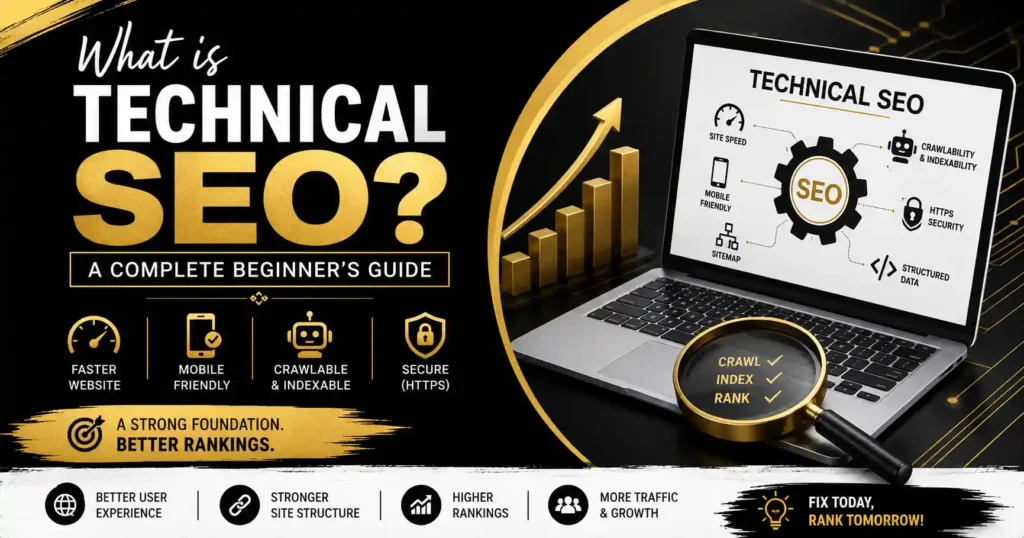
If you have ever written an amazing blog post, hit publish, and then waited… and waited… and nothing happened on Google, there is a good chance the problem is not your writing. It is your website’s technical health.
This is where the question comes in: what is technical SEO, and why does it matter so much for your rankings? In this guide, I will break it down in plain, simple language so you can actually understand it and start improving your own site today.
What is Technical SEO?
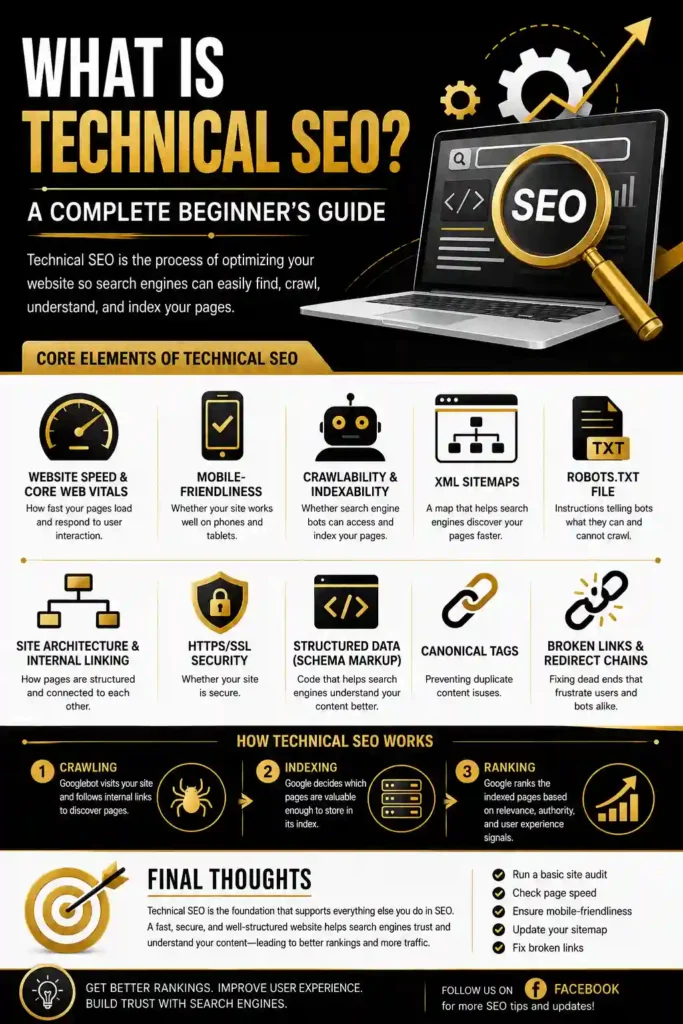
In the simplest terms, technical SEO is the process of optimizing your website so that search engines like Google can easily find, crawl, understand, and index your pages. It has nothing to do with keywords or content quality directly. Instead, it focuses on the backend structure of your website — the “engine room” that most visitors never see, but that search engines care about a lot.
Think of your website like a shop. Your content (blog posts, product pages, images) is the merchandise on the shelves. But technical SEO is the doors, the lighting, the signboards, and the pathways that let customers (and in this case, Google’s bots) walk in, find what they need, and move around without getting stuck.
If your technical SEO is weak, even the best content in the world may never rank, simply because Google struggles to crawl or understand your site properly.
Some of the core elements that fall under technical SEO include:
- Website speed and Core Web Vitals – how fast your pages load and respond to user interaction
- Mobile-friendliness – whether your site works well on phones and tablets
- Crawlability and indexability – whether search engine bots can access and add your pages to their index
- XML sitemaps – a map that helps search engines discover your pages faster
- Robots.txt file – instructions telling bots what they can and cannot crawl
- Site architecture and internal linking – how pages are structured and connected to each other
- HTTPS/SSL security – whether your site is secure
- Structured data (Schema markup) – code that helps search engines understand your content better
- Canonical tags – preventing duplicate content issues
- Broken links and redirect chains – fixing dead ends that frustrate users and bots alike
All of these pieces work together quietly in the background, helping search engines trust and understand your website. When you improve these elements, you are directly helping your on-page and off-page SEO efforts perform better too.
If you want to dig deeper into how content and keywords work alongside this, you can check out our detailed guide on Benefits of SEO for Business to see how the two connect.
Why Technical SEO Matters and How It Works
Now that you know the definition, let’s talk about why it actually matters and how it works in practice.
Search engines use automated programs called “crawlers” or “bots” to scan the internet. These bots visit your website, read your pages, follow your links, and then decide whether to add your content to their index — basically Google’s giant library of web pages. If a page is not indexed, it simply cannot appear in search results, no matter how good it is.
This is exactly why what is technical SEO becomes such an important question for site owners, bloggers, and businesses. Without proper technical setup, you could be creating fantastic content that Google never even sees.
Here is how it typically plays out on a real website:
- Crawling – Googlebot visits your site and follows internal links to discover pages.
- Indexing – Google decides which pages are valuable enough to store in its index.
- Ranking – Google ranks the indexed pages based on relevance, authority, and user experience signals.
If your site has slow loading speed, broken links, duplicate content, or a confusing structure, it creates friction at every one of these steps. A slow site frustrates both users and crawlers. A messy sitemap confuses bots about what pages matter most. Missing HTTPS security can make browsers show warning signs to visitors, hurting your credibility.
On the other hand, a technically sound website loads quickly, is easy to navigate, works well on mobile, and gives clear signals to search engines about its structure and content. This builds trust, and trust leads to better rankings over time.
Another often overlooked part of technical SEO is internal linking. When you link relevant pages together — like connecting this article to a guide on Importance of SEO for Business
— you help both users and search engines understand the relationship between your content. It spreads “link equity” across your site and keeps visitors engaged longer, which are both positive ranking signals.
Technical SEO also supports your other marketing efforts. For example, if you are sharing your blog posts on social platforms, a technically optimized website with fast loading speed and proper meta tags will look more professional and get better engagement. If you want more SEO tips and updates like this, feel free to follow our page on Facebook where we share regular content.
Final Thoughts
So, to sum it up simply: technical SEO is the foundation that supports everything else you do in search engine optimization. You can have brilliant content, strong backlinks, and perfect keyword targeting, but if your website is slow, broken, or hard to crawl, none of that will matter much.
Start by running a basic site audit — check your page speed, confirm your site is mobile-friendly, make sure you have an updated sitemap, and fix any broken links you find. These small steps can make a big difference in how search engines see and rank your website.
Technical SEO might sound intimidating at first, but once you understand the basics, it becomes a lot more manageable — and honestly, kind of satisfying once you see your rankings start to improve.